The story
When we face chaos, Avy Leghziel says, most of us go straight to the facts: tell me exactly what is going on, so there are no surprises.
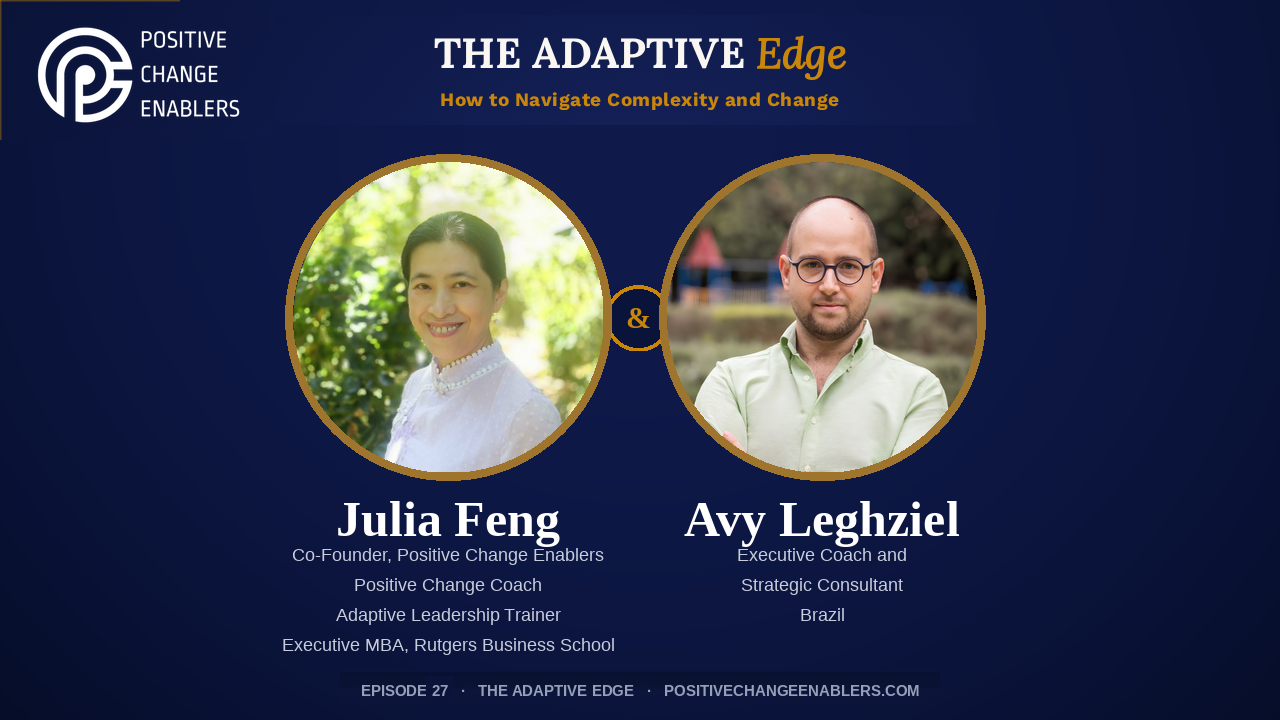
Avy is an executive coach and strategic consultant, Italian and living in Brazil, who works with founders and leaders in chaotic times. He calls the skill he leans on relational intelligence.
“A hidden stream of information.”
The skill at work: Emotional Literacy (Skill 3)
Emotional Literacy is the skill of reading the mood of a system: the fear, stress or avoidance that shows up before it shows in the work. Avy reads it in others, and in himself.
He understood why surprises hit so hard
People like a surprise party, Avy says, but not heavy rain on the way to a 9am meeting, or a boss announcing a sudden pivot. In the first months of COVID, much of the fear came from not knowing: will this last a decade? We cope badly when we cannot see the possible scenarios.
He looked beyond the facts
Relational intelligence, Avy says, is understanding how a situation makes other people feel, “in a very embodied way, not only cognitive way,” so you can navigate it together with them.
He treated gut feelings as data
Other people’s intuition and gut feeling may not be objective data, but Avy sees them as “a hidden stream of information.” If so many people are stressed, or not stressed enough, what does that say about the crisis?
He asked what different reactions meant
In a team, some people become very cooperative, while others shut down and go into an operative mode. Avy asks: what does that mean? What am I learning about the problem, about our ability to explore new solutions, and about my own role?
He tested his guesses openly
This skill, Avy says, is learned only by observing. Come up with hypotheses about why someone behaves a certain way, test them almost scientifically, and “open that conversation in a vulnerable way.” Reading good fiction with complex characters helps too.
He read his own mood too
Avy’s example of real reflection: after a stressful meeting, “stakes were very high, and that’s why I was very defensive.” He had answered every question, which left no room for conversation. Next time, he would facilitate instead.
What happened
Avy now helps founders, executives and teams build the skills to grow within chaos. Relational intelligence is one of the three skills he names first, alongside exploring ideas from far outside your field and reflecting with sharp questions.
Try this
In your next team meeting about a hard change, notice who leans in and who goes quiet. Afterwards, write one hypothesis about what each reaction is telling you, and check one of them with that person in a short, open conversation.
More stories
Reading the signal: Alex Weber’s story of Emotional Literacy →
Tasting the disappointment: Joshua Voon’s story of Emotional Literacy →
Chaos Is Information: Avy Leghziel’s story of Keen Observation →
This article is our interpretation of Avy’s story, based on the conversation on The Adaptive Edge Podcast. The framework names are ours; the events and lessons are his own.