The story
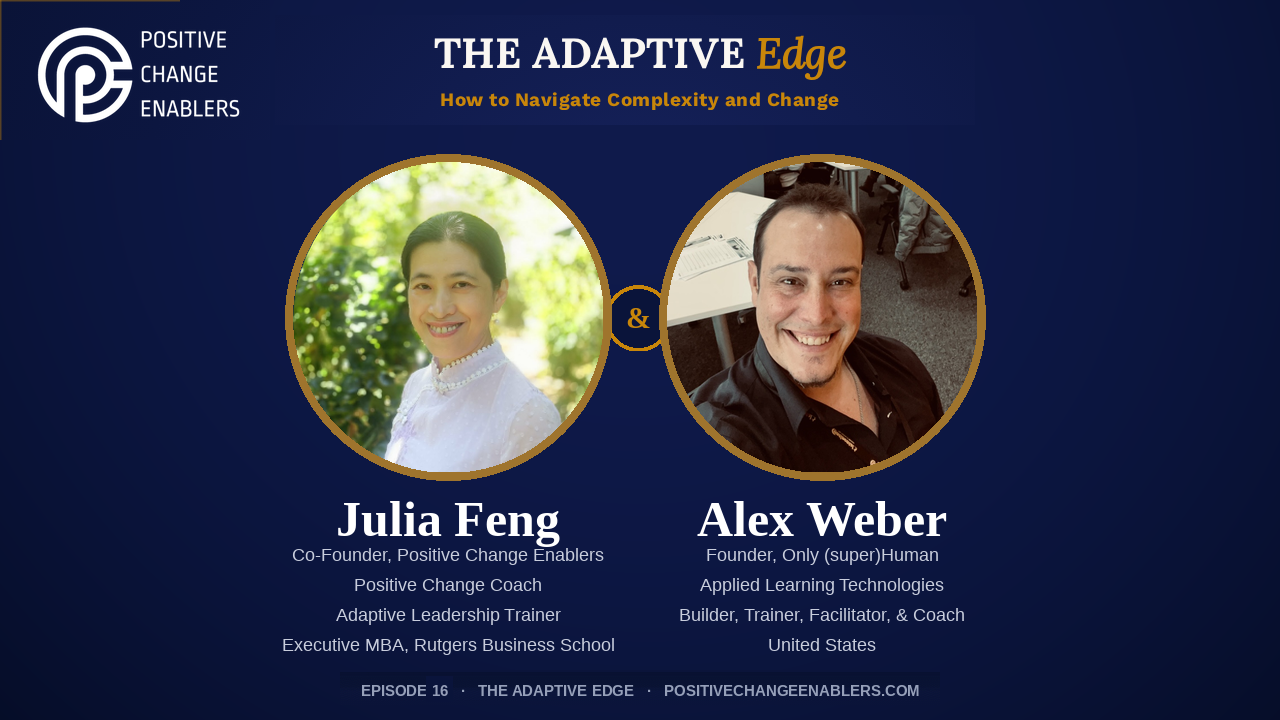
Alex Weber is a trainer, facilitator and coach, and the Founder of Only (super)Human Applied Learning Technologies. He lived in China for about 18 years, 14 in Beijing and 4 in Shanghai, and did most of his coaching and facilitation work in Mandarin. When he returned to California, he felt, in his words, like an immigrant in his own country. Two and a half years with an AI company in Silicon Valley followed, a time he is grateful for but spent playing a role that was not quite him. He is now back in the training world and is still living this story, so he does not claim a tidy ending.
“Emotions are feedback.”
The skill at work: Emotional Literacy (Skill 3)
Emotional Literacy is the skill of recognizing and naming emotions, your own and the mood of the system around you, and treating them as data for what to do next. In Alex's story it shows up as a steady practice of noticing, naming and listening to what he feels before he decides.
Noticing the feeling in the body first
Alex says he did not start with a label. He felt like he was sitting in the dark, with a hand on his throat, unable to breathe. Only afterwards did he translate it into words: stifled, anxious, fearful. He points out that a single word is a thin description of a whole range of feeling, like describing a symphony with one horn, so he pays attention to the sensation too.
Letting someone hold up a mirror
For two years he reframed his situation until it sounded fine. Someone close to him told him it had become superficial: he was talking himself into being okay with something that was hurting him. Emotional literacy includes being able to hear that, and to ask whether the story you are telling yourself matches what you actually feel.
Seeing how fear was driving the choices
When he lost his job at a hard moment, he caught himself reacting from fear and from what he thought he was supposed to want. He knows from experience that his choices go better when they come from curiosity and a wish to be of service. Naming the fear let him pause, zoom back to the present moment, and ask what was within his circle of control. That pause is Self-Regulation (Skill 8) at work, and it starts with reading the emotion correctly.
Treating emotions as information
He says we are taught to switch emotions off at work, as if they were immature, yet people who cannot access emotion struggle to decide anything. For him, emotions are feedback that connect him to his values, his needs and his purpose. Neither lashing out nor pretending to feel nothing is the answer.
Letting the heart check each option
When he faces a decision, he takes one option into sleep, notices how he feels when he wakes, then does the same with the other. Over a night or two the answer becomes something he feels as well as thinks. His top value is now authenticity, and he says things went better once he acted from it.
Reading the mood of a bigger system
He brings the same habit to his work with organizations. In the AI conversation, he sees fear and finger-pointing between countries and inside companies, and he argues for time with people, psychological safety, and learning conversations so that people feel the change is theirs. Reading the mood of the system comes before moving it.
Try this
Think of a decision or change you are facing. Where do you feel it in your body? What word fits that feeling best, and what is it telling you about what matters to you?
This article is our interpretation of Alex's story, based on the conversation on The Adaptive Edge Podcast. The framework names are ours; the events and lessons are his own.