The story
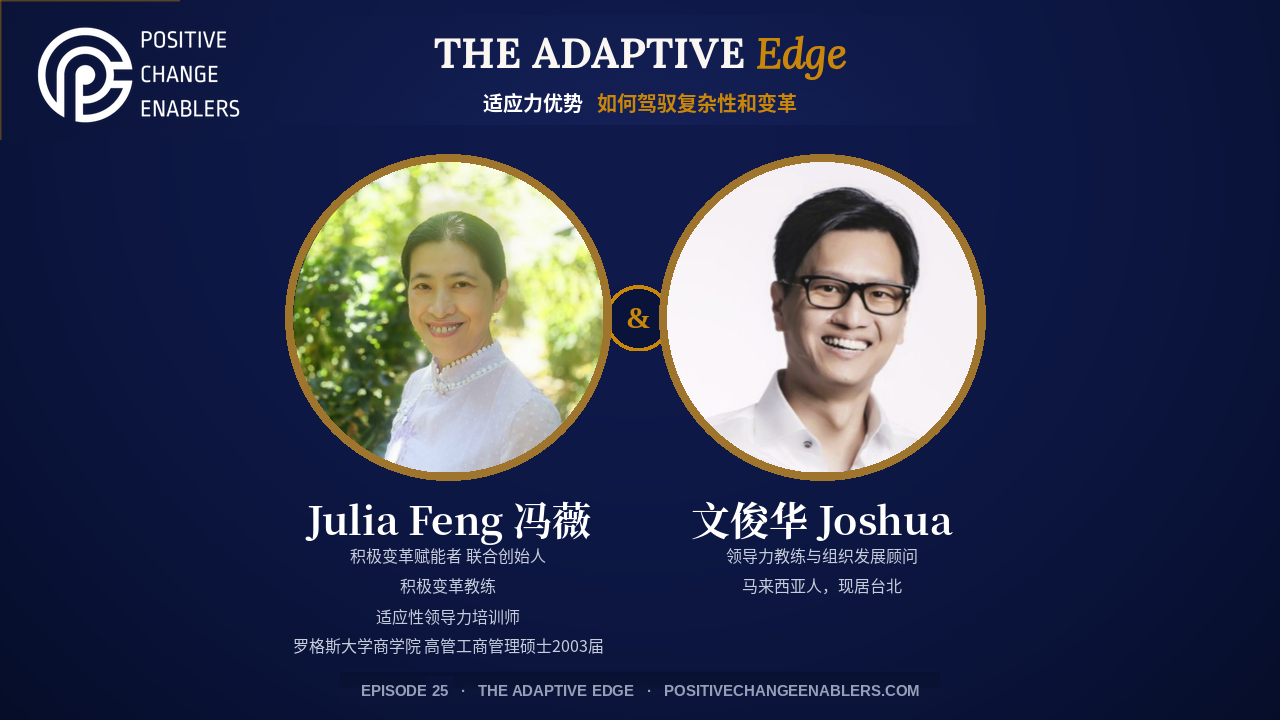
Joshua Voon (文俊华) is a Malaysian leadership coach and organization development consultant who has lived in Taipei for the past nine years.
In 2015 he had a good in-house job in Doha, with benefits that covered his daughter’s schooling. A former boss, now running his own consultancy, kept telling him there was plenty of work waiting if he would only resign and join him. Joshua trusted him, left, and went home to Malaysia. Three months later, not one project had come through.
“Miracles, you have to create yourself.”
The skill at work: Emotional Literacy (Skill 3)
Emotional Literacy is the skill of reading the mood in a system. It starts with reading your own. Before you can read a room, you need to read what is moving inside you, and Joshua’s story is about that first step.
He named what he felt
When he realized there was no work, his strongest feeling was simple: disappointment. He did not dress it up or explain it away.
He noticed two voices at once
Alongside the disappointment, another voice said: wait a little longer, there may still be hope. Joshua noticed both, and did not let either one cancel the other.
He chose not to get rid of the feeling
He did not try to wipe out the disappointment. Instead he tasted it: what is this feeling, what is it trying to tell me, what can I learn from it, and what do I need right now? He calls this presencing.
He let the feeling point to a lesson
The lesson was practical. He trusts people very easily, so next time he will ask more questions and check the facts before a big move.
He uses the same skill today
His daughter is about to leave home for university. He feels the sadness of parting and knows he must let her live her own life. He welcomes both feelings at once.
He created his own miracle
Back in Singapore, he gave free talks at co-working spaces and chambers of commerce, one room at a time, until his business took shape again. One of those projects brought him to Taipei.
Try this
The next time a strong feeling shows up, pause before trying to fix it. Ask: what is this feeling, what is it trying to tell me, and what do I need right now? Write the answers down before you act.
Another story of this skill
Reading the signal: Alex Weber’s story of Emotional Literacy →
This article is our interpretation of Joshua’s story, based on the conversation on The Adaptive Edge Podcast. The framework names are ours; the events and lessons are his own.
The conversation with Joshua is in Mandarin. Quotes here are our English translations.