The story
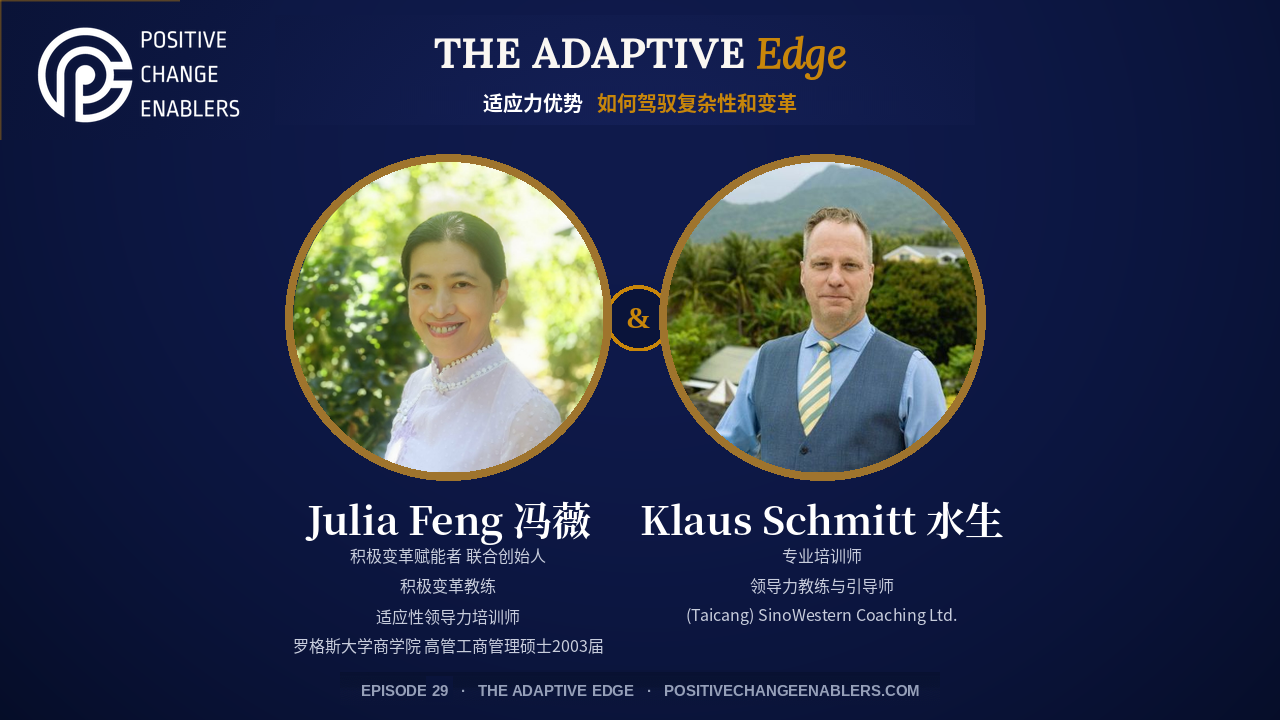
Klaus Schmitt, known in Chinese as 水生, is a professional trainer, leadership coach and facilitator. He comes from Hamburg, Germany, and has lived in Shanghai for more than twenty years. His conversation with Julia was in Mandarin.
In 2013, Klaus had a stable full-time job but little room to grow. He had worked with a coach himself and taken a year-long Train the Trainer course. When he heard that a one-year coaching program was about to start, he signed up at the last minute. That year showed him his life’s mission, and he left his job to become a trainer and coach.
“What is logic? Your logic, my logic and his logic are not the same.”
The skill at work: Powerful Questioning (Skill 6)
Powerful Questioning is the skill of asking questions that help people think for themselves, and of giving the work back instead of handing out answers. For Klaus it starts with curiosity.
He let difference make him curious
When Klaus came to China, so much was different from Germany: the culture, the way people think. Instead of being put off by it, he let it raise his curiosity, and he has worked to keep that curiosity ever since.
He made questions his main tool
As a leader, trainer or coach, Klaus says, the point is to ask questions. Because so much in China works differently from the West, he learned to ask more deeply: why is it like this? Is there a reason behind it?
He stopped using the word “logic”
Klaus avoids the word in his work. Everyone’s logic is different, so calling something illogical says more about you than about them. When a Chinese colleague tells him something surprising, he does not judge it as good or bad. He asks what lies behind it.
He asks to understand, not to judge
Every person has a reason for what they do, Klaus says, a background to their behavior and their feelings. His questions aim to understand that reason. One of the deepest human needs, in his view, is to be understood, and connection begins there.
He gives the work back
His advice for anyone thinking about changing their career is not an answer but a way of asking: stay open, do not rush to call something good or bad, and ask more questions.
He asks himself the hardest questions
Klaus’s last advice is to pause, however busy you are, and ask yourself: what am I actually doing? What am I thinking? How do I feel? Those questions, he says, help you find your own inner beliefs.
What happened
Thirteen years after leaving his job, Klaus works as a trainer and coach across cultures, in Chinese, English, German and French. He calls that change one of the biggest of his life.
Try this
The next time someone’s behavior seems to make no sense to you, hold back the word “illogical”. Ask one open question instead: what is behind this for you?
More stories
Solving the right problem: Amit Soundalgekar’s story of Powerful Questioning →
Giving the work back: Jack Carney’s story of Powerful Questioning →
Further down the road, for now: Robin Willison’s story of Powerful Questioning →
This article is our interpretation of Klaus’s story, based on the conversation on The Adaptive Edge Podcast. The framework names are ours; the events and lessons are his own. The conversation was in Mandarin; quotes are our translation.