The story
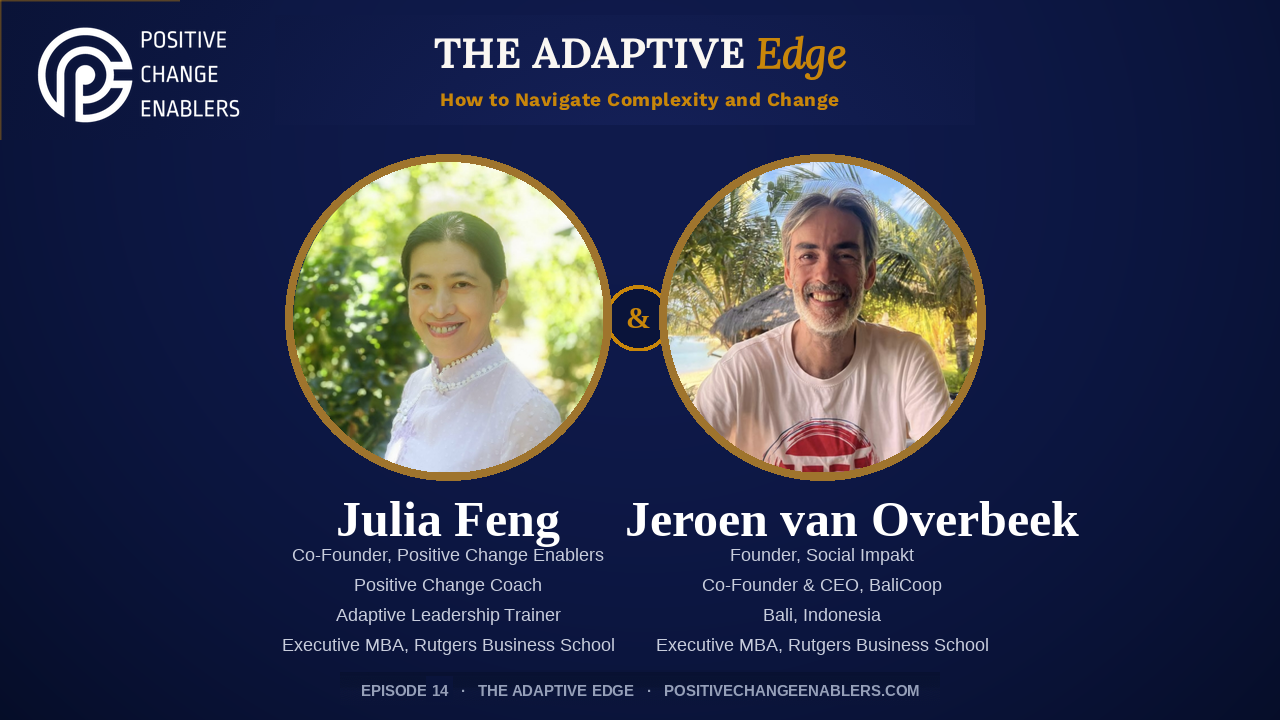
Jeroen van Overbeek is Dutch, grew up in France, and spent twenty years in corporate roles in Europe and China before leaving to become a social entrepreneur. For 13 years he has been based in Bali, bringing clean drinking water to remote communities in eastern Indonesia with a simple, affordable water filter that costs about twenty dollars.
In 2018 a major earthquake hit Lombok, the island next to Bali. Pipes broke, and people had no clean water. His filter turned out to be exactly what disaster relief needed, and he had to scale his volumes about 30 times in two weeks, with the factory on Java, two islands away from where the filters were needed.
“My corporate experience helped me a lot about logistics, about planning.”
The skill at work: Systems Thinking (Skill 1)
Systems Thinking is the skill of seeing how the parts of a situation connect, and finding the one point where a small change moves the whole system. Jeroen did not treat the surge as a single problem of “make more.” He looked at the whole chain, from factory to trucks to people in tents.
Asking where the bottleneck was
He called the factory owners and asked a simple question: what is going to limit us? The answer was not the factory floor or the trucks. It was one component, the filter element itself.
Redesigning the range around the constraint
He cut his offer to two products and changed the larger model to use fewer filter elements, so that the scarce part could be stretched across more units. He says it was the right decision, because it let the factory keep supplying for the three or four months the demand lasted.
Matching the product to who needed it
The two products followed the real situation on the ground: a family size for people sitting in tents next to their damaged houses, and a larger one for community kitchens, schools and other centers where many people were staying.
Planning the whole journey
Full trucks carrying about 800 filters at a time travelled from the factory on Java, through Bali, to Lombok. Getting that right meant planning the production, the loading and the route as one connected system.
Using what he already knew
He credits his years in corporate roles. They taught him what a factory can and cannot do, where bottlenecks tend to hide, and how to plan logistics. He had not expected to need it in disaster relief, and it became his advantage.
Try this
Pick a goal of yours that depends on several people or steps. Where is the narrowest point, the one thing everything else waits for? What could you simplify or drop so that more can flow through it?
This article is our interpretation of Jeroen’s story, based on the conversation on The Adaptive Edge Podcast. The framework names are ours; the events and lessons are his own.