The story
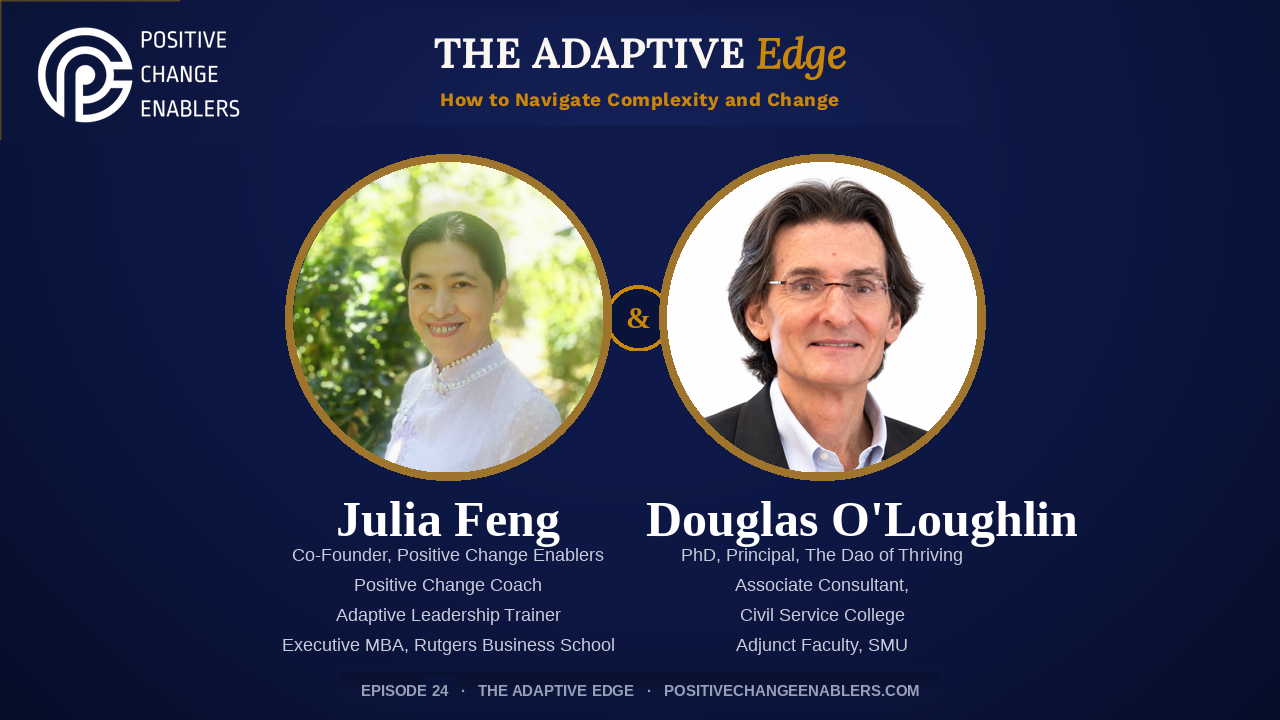
Douglas O’Loughlin, PhD, has worked in organization development in Singapore for more than 30 years. He wrote a book on polarities and teaches leaders how to work with them.
A polarity is a pair of things we need over time, like change and stability, or being optimistic and realistic. Douglas finds that many conflicts come from two groups each holding one side and seeing the other side as the problem.
“They’re visionary but they’re also grounded.”
The skill at work: Conflict Facilitation (Skill 7)
Conflict Facilitation is the skill of turning disagreement into something productive. Douglas’s tool for doing that is to help people see the polarity underneath the fight.
He names the polarity behind the conflict
In IT organizations, developers want to get apps out to users fast, while cybersecurity and compliance teams want to make sure it is done safely. “Often those departments don’t like each other very well.” Each side sees the other as reckless or overly conservative.
He points both sides to the higher good
Once they see the polarity, the conversation changes. Both teams want safe and useful programs for their users. The question becomes: how do we work together?
He separates a trade-off from a polarity
On a Saturday morning you may have to choose between your family and a work event. That is a trade-off: you decide. Over the long term, the polarity is how to have both a good personal life and a good working life. You still make decisions, but you stop treating one side as the enemy.
He sees the same tension everywhere
Optimism and realism. Centralization and decentralization. Managing up and managing down. If you only manage up, people see you as siding with the top; if you only manage down, you end up complaining about the system. “You’ve got to do both.”
He looks for leaders who hold both sides
The leaders Douglas admires most manage their polarities well: visionary and grounded, firm and kind. When he was writing his book, his wife suggested its title: ANDlightenment.
Try this
Think of a recurring conflict between two people or teams. Write down what each side is protecting. If there is a polarity, two things you need over time, bring both sides together around one question: how can we get the best of both?
Learn more from Douglas
His books, on Amazon in paperback and Kindle: Facilitating Transformation and ANDlightenment. His 12-minute TEDx talk: How to Spot Polarities.
More stories
The disruptor who wants to be challenged: William Anderson’s story of Conflict Facilitation →
People Don’t Resist Change: Douglas O’Loughlin’s story of Active Listening →
This article is our interpretation of Douglas’s story, based on the conversation on The Adaptive Edge Podcast. The framework names are ours; the events and lessons are his own.